Coffe Table Book
The Salt Line is an oyster house with locations across the DMV — Washington DC, Northern Virginia, and Maryland — built around a single brand idea: oysters thrive at the brackish meeting point where fresh water meets salt water. It's where the restaurant takes its name.
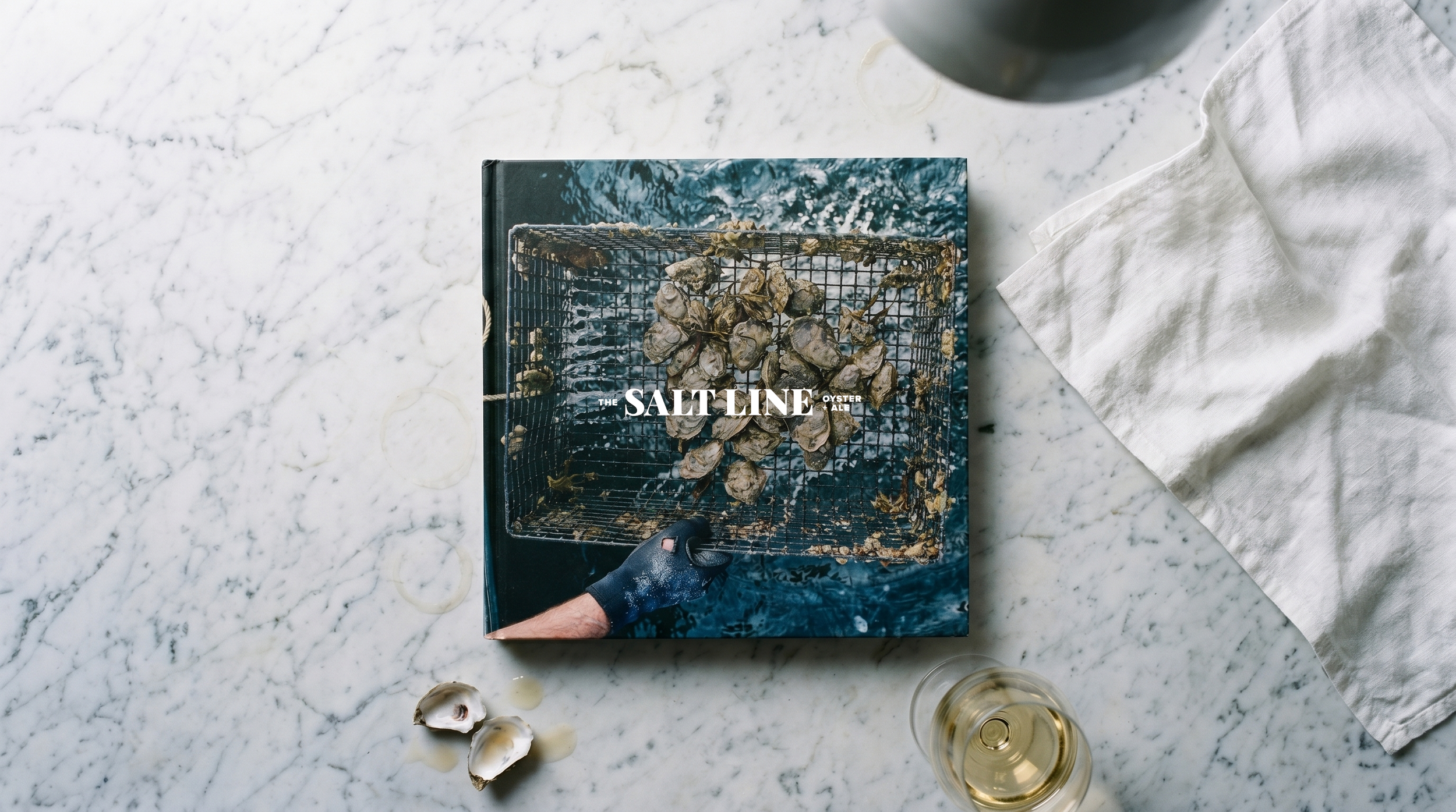
This is a self-initiated spec project: a coffee-table book that brings that idea to life as an editorial story, following an oyster from the cage on the Eastern Shore of Maryland to the plate at the bar in Navy Yard. Designed to feel less like a marketing piece and more like a publication you'd actually want to keep — the kind of object a great hospitality brand uses to tell its own story. Every photograph generated with AI, every page designed in the same editorial register that the restaurant already lives in.
AI Creative Direction
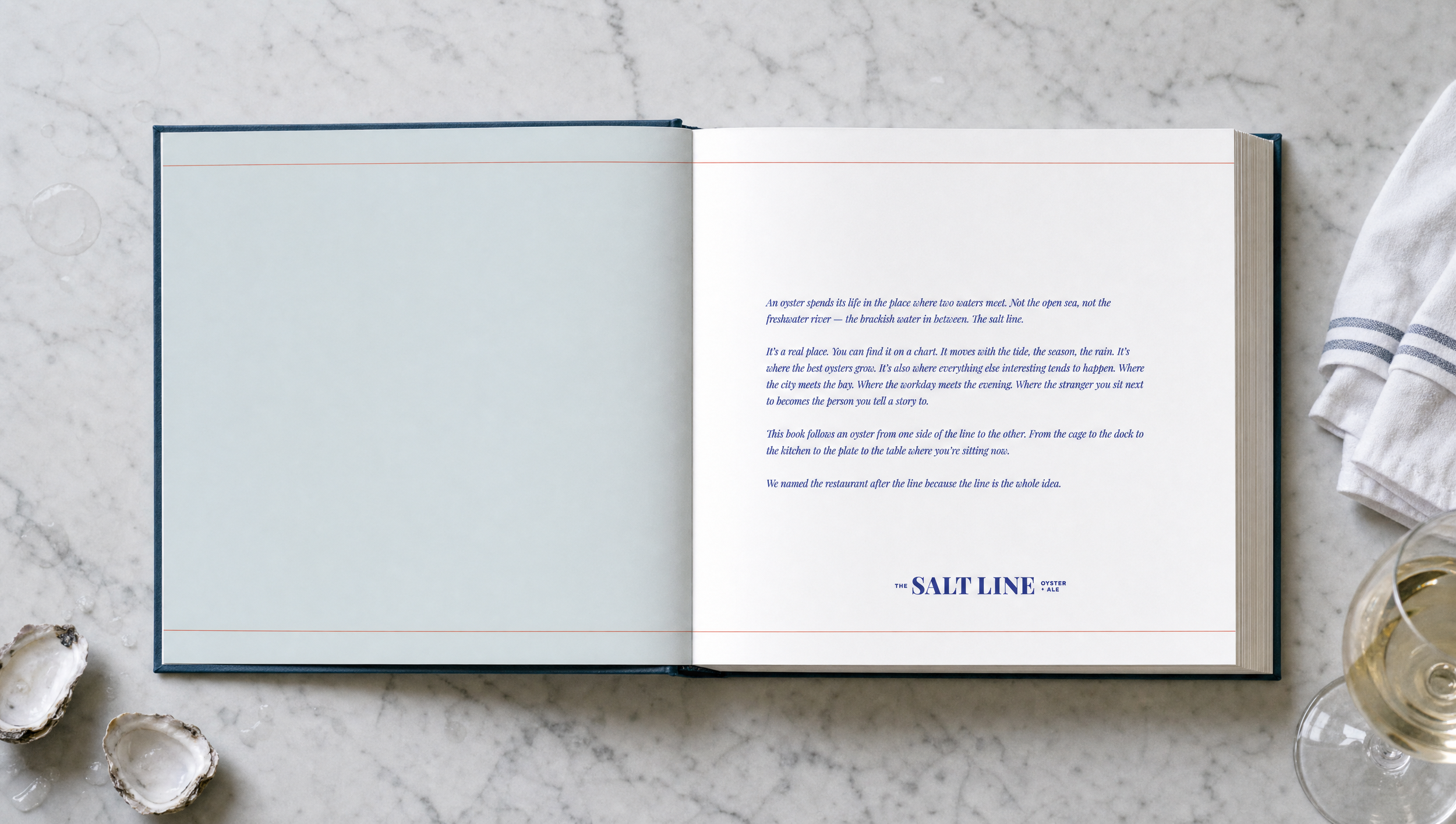
The salt line is a real geographical phenomenon — the brackish zone where fresh river water meets the bay, and where oysters grow best. The Salt Line names it in a single line on their About page: "Oysters thrive where fresh and salt water come together." The whole brand sits on that sentence. The book is what that sentence looks like when you give it 100 pages and let it breathe — a slow, observational walk through the journey of a single oyster, told as a designed object.
The book follows the oyster from one side of the line to the other.
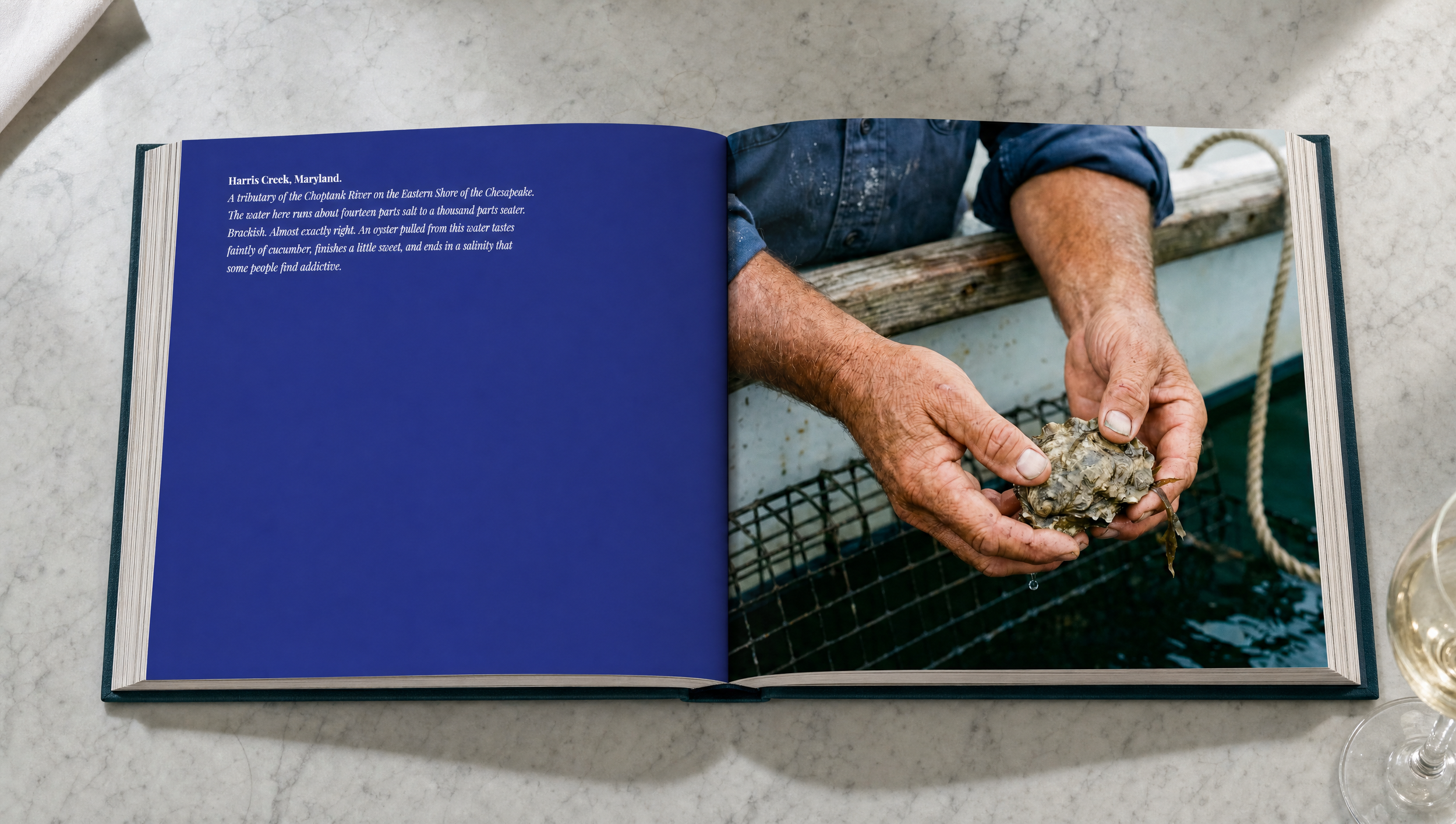
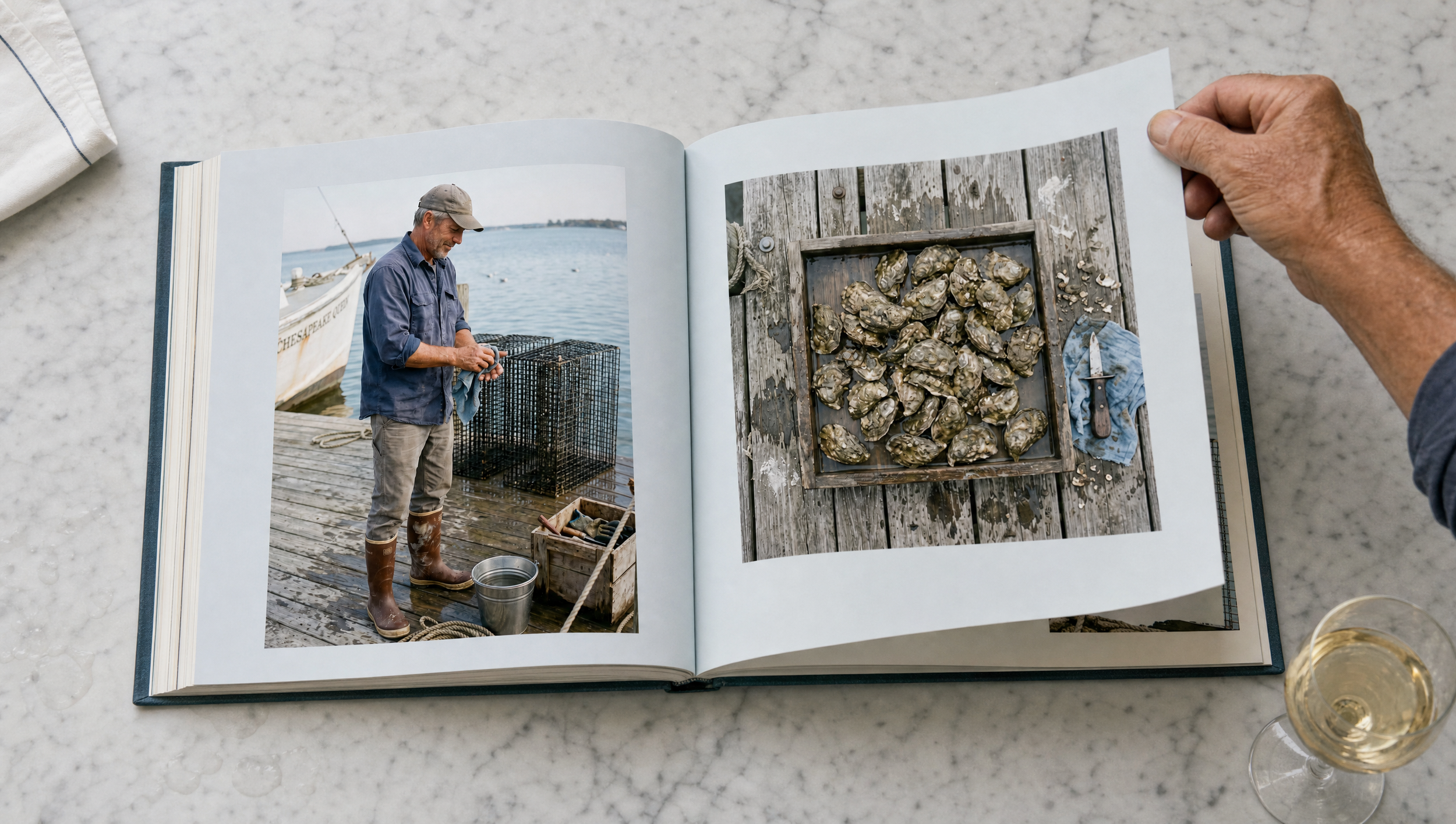
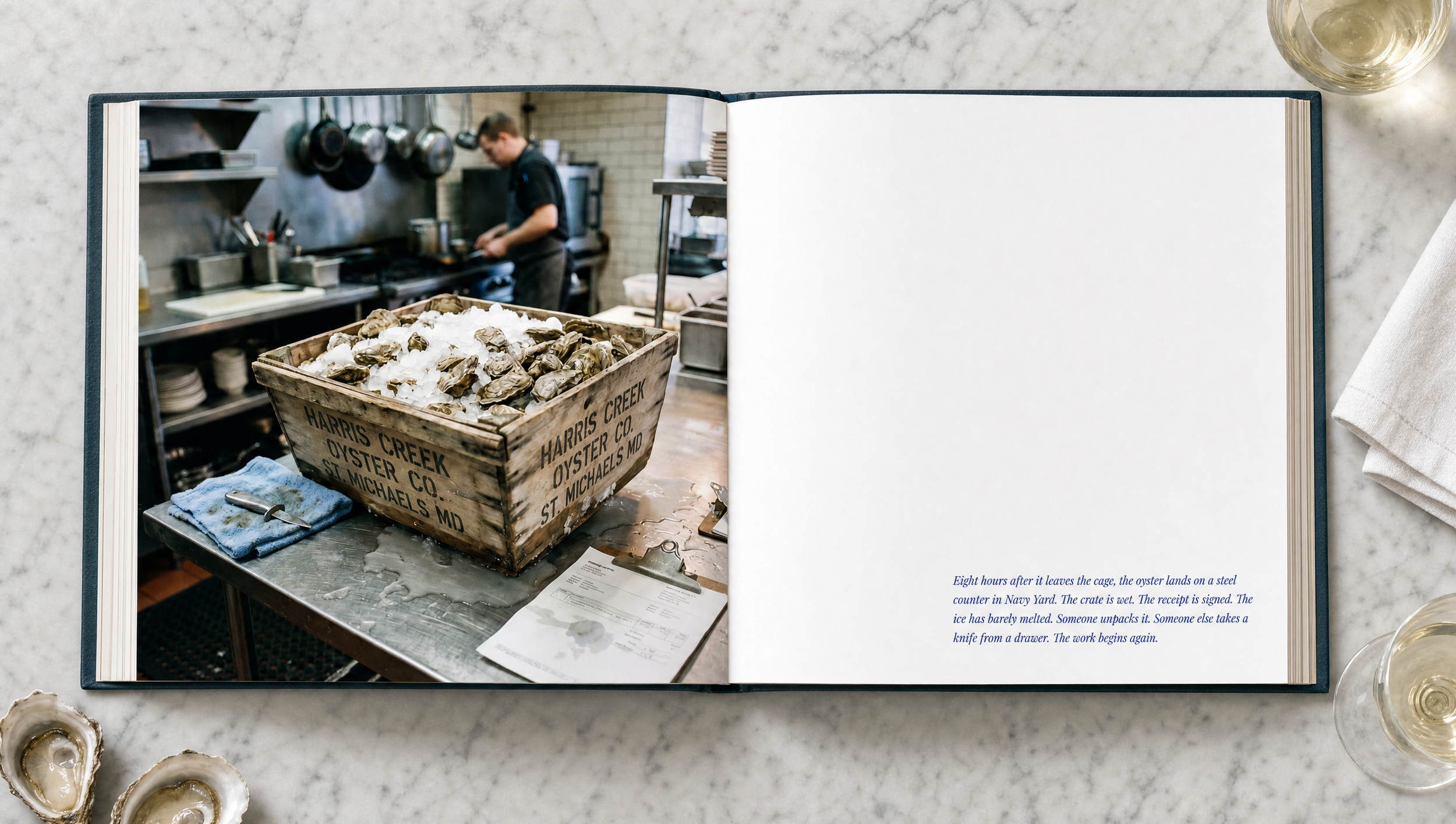
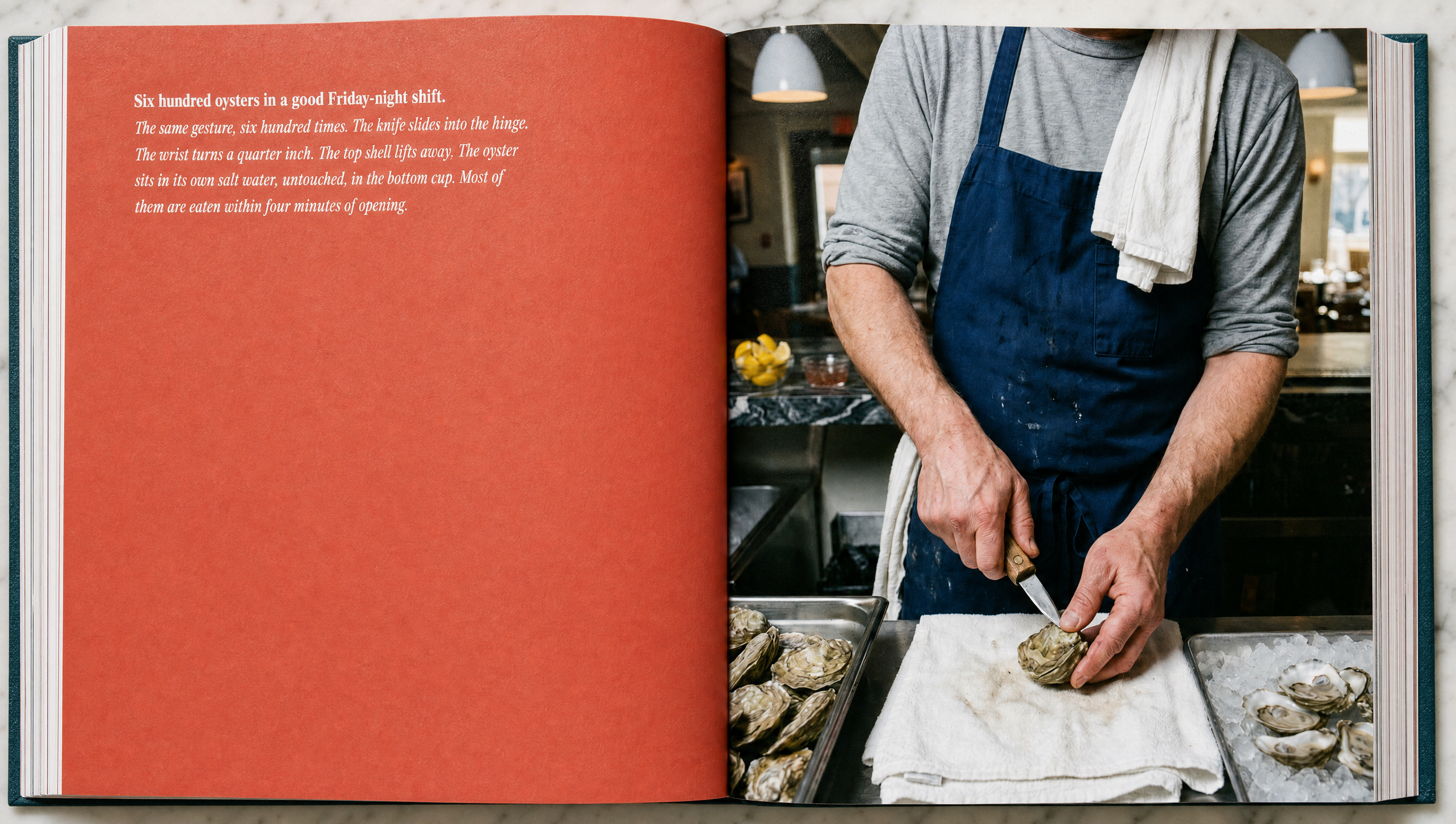
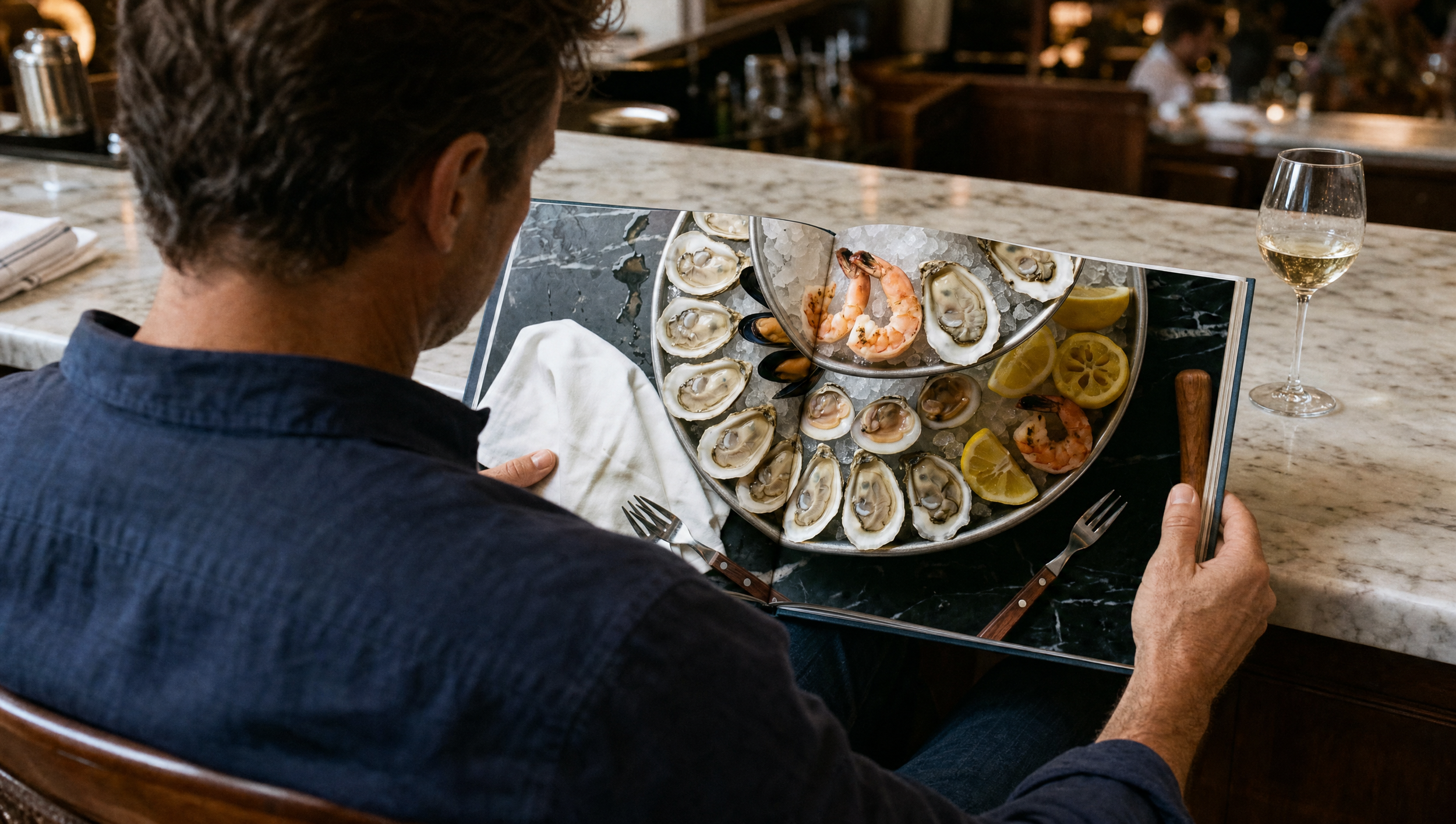
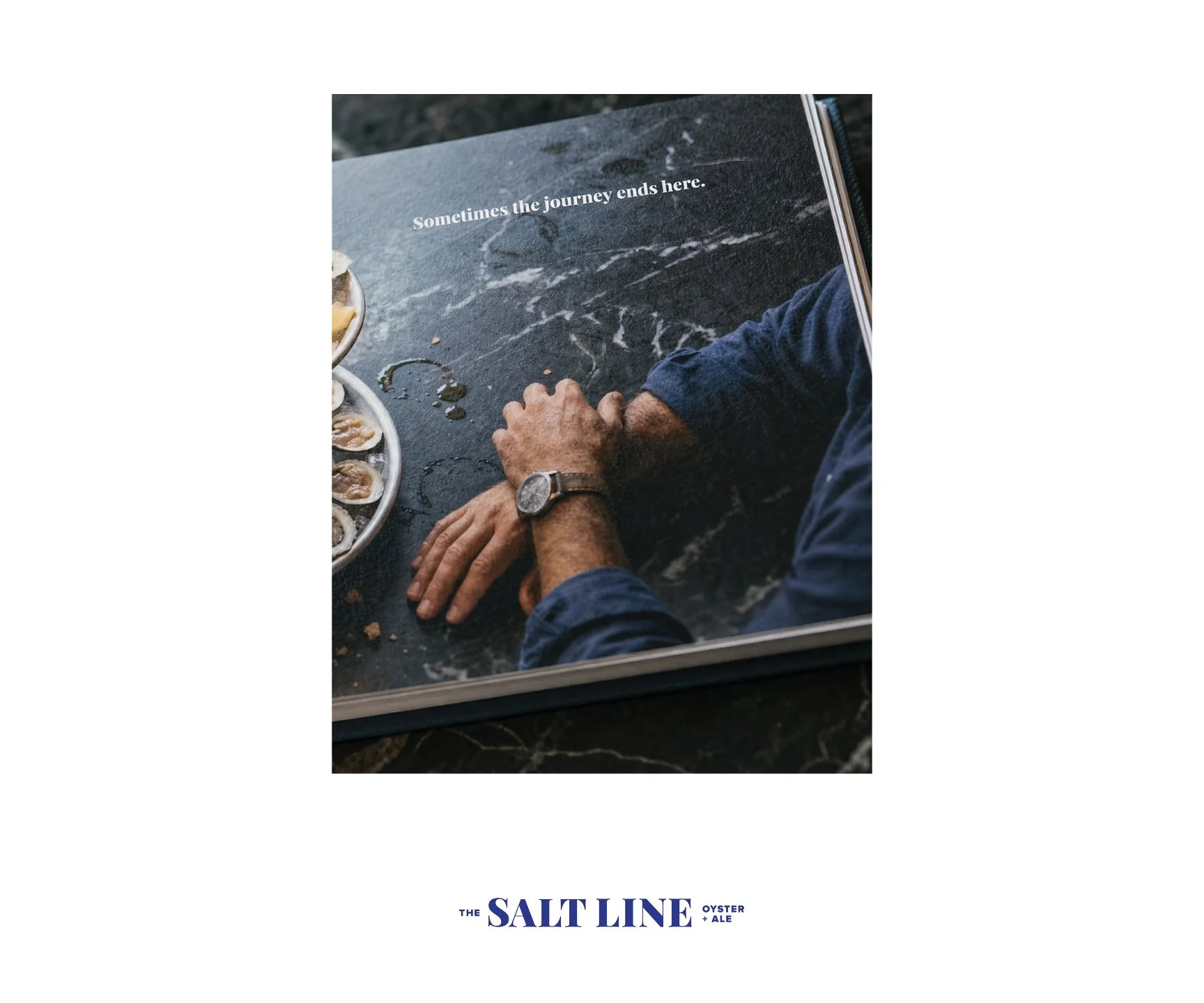
The water at Harris Creek on the Eastern Shore. The waterman on the dock at sunrise. The crate landing on the steel counter in Navy Yard. The shucker working through a Friday-night shift. The seafood tower at the center of a table. The meal, the bar, the people meeting over it.
Each chapter is a small story. Together, they're the journey the restaurant has been making every day for years.
Every image was art-directed shot by shot to read as a documentary. Each one is anchored to a real place — Harris Creek for the water, Navy Yard for the kitchen, the marble bar that runs through every location of the restaurant. The book mockups were placed on the same marble surface throughout to give the carousel a consistent visual world.
No shoot, no models, no food stylist, no location scout. Casting decisions, wardrobe, prop logic, food styling, lens choice, time of day — all directed before any image was generated. The realism was the whole game; the moment an image looked too clean, it stopped feeling like The Salt Line.
The book exists as a designed object that could be sent to a printer tomorrow.
A coffee-table book is a particular kind of brand object. It doesn't sell anything directly. It says: we take our story seriously enough to publish it. For a hospitality brand built on a real geographical idea, that's the highest form of the brand's own argument — turning a sentence on an About page into a book you'd leave on your living-room table. Built without a camera. Proof that creative direction is what makes the work, not production.